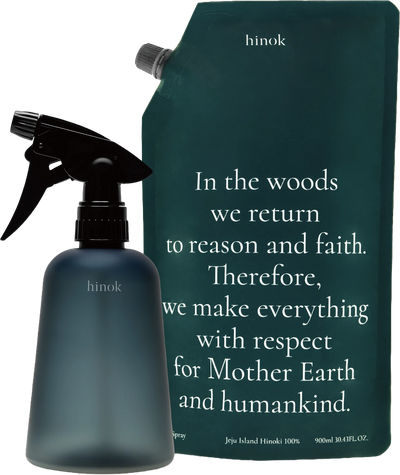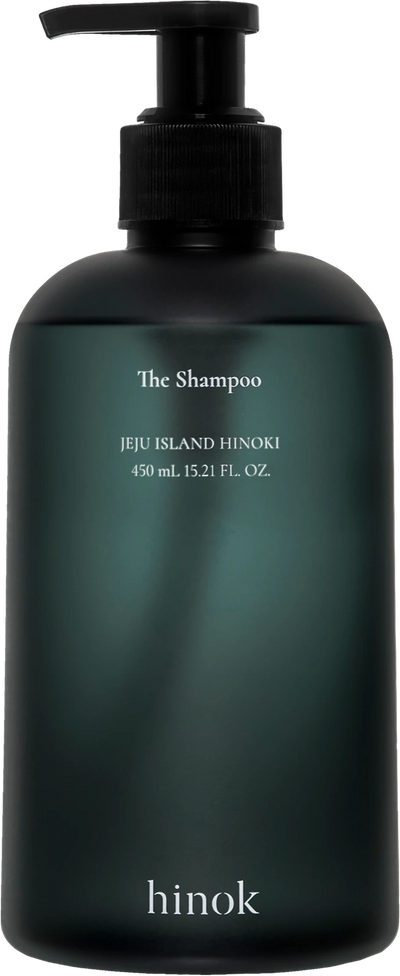

Ask where hinok began and the answer is not a laboratory. It is a grove — volcanic soil, sea wind, and a cypress that has been growing on Jeju Island for longer than Korea has kept written records.
That is where every bottle starts. The ingredients, the decisions, the restraint — all of it traces back to the particulars of one island.

The Question of Place
Most beauty and home care brands begin with a formula and then look for ingredients that serve it. We worked the other way. Jeju came first. The question was not "what can we make" — it was "what does this island offer, if we take only what it sheds?"
The answer is Jeju Hinoki Cypress (Chamaecyparis obtusa) — a specific species of cypress that grows in the island's volcanic basalt. Nothing about our line would be the same if we sourced from anywhere else.
What Hinoki Cypress Is
Hinoki Cypress is a slow-growing evergreen native to Japan and Korea. On Jeju, the trees grow along the island's oreum — small volcanic cones that catch morning mist and filter it into deep, mineral-rich soil beneath.
What matters for hinok is what these trees release. Cypress groves carry phytoncides — the aromatic compounds trees use to protect themselves from bacteria and fungi. When you walk through a cypress forest, you are breathing what the forest releases to keep itself clean. Two of these compounds, α-pinene and limonene, are present in Jeju hinoki water.
The scent is a byproduct of that chemistry. Not something added afterward — what the tree itself gives off as it lives.

Why It Can't Just Be Anywhere
There are hinoki cypress forests across Asia. We source from Jeju because the island's specific conditions — porous basalt, steady ocean humidity, frequent island mist — shape the trees' growth rate and the composition of what they release. Cypress growing in flatter, drier soil releases a different balance of compounds.
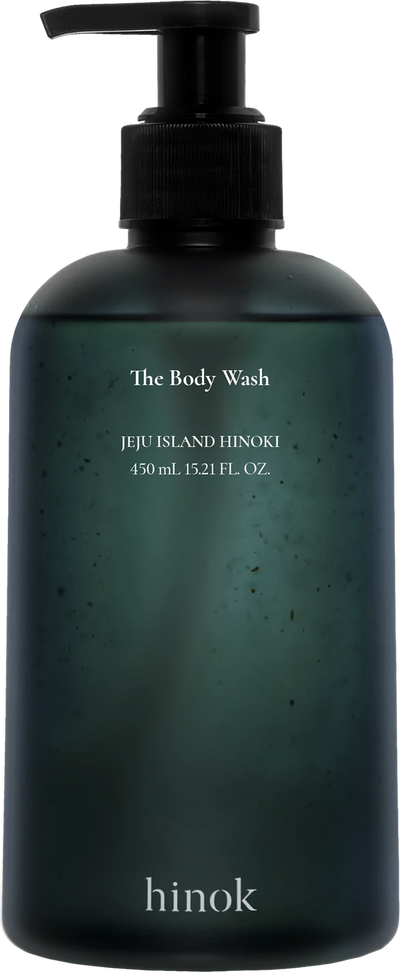
This is why we name the origin on every bottle. "Hinoki" on a label without a place tells you very little. "Jeju Hinoki Cypress" tells you exactly where the water in your bottle was formed, and under what conditions.
Pruning, Not Harvesting
Old-growth cypress groves require regular pruning to stay healthy. Broken branches, fallen leaves, trimmings from routine care — these accumulate and are traditionally discarded or burned.
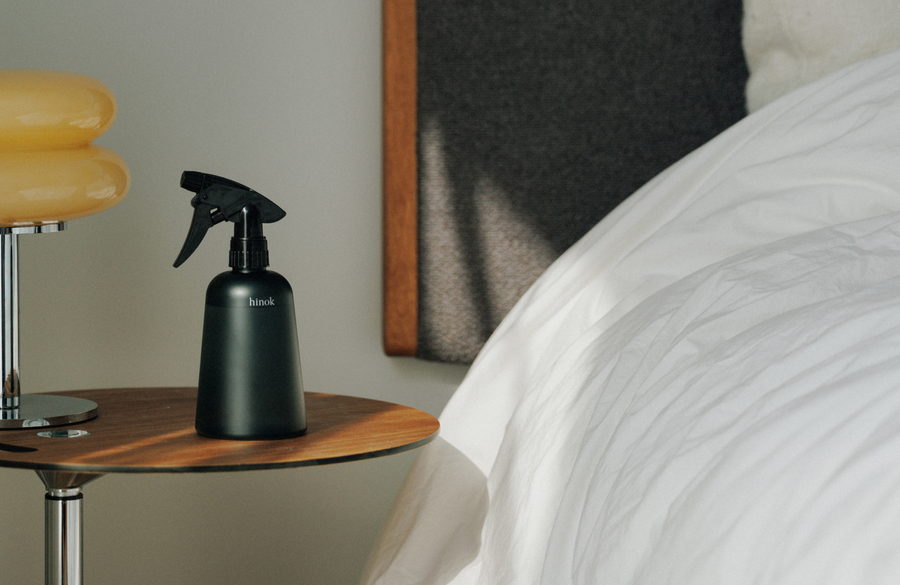
We gather them instead. Steam distillation turns this pruning byproduct into the hinoki water that goes into The Spray. No tree is cut for hinok. No grove is reduced in order to fill a bottle.
Fallen, not Harvested.

What This Means for Your Bottle
Because we receive what the season offers rather than specify what we need, each batch carries a subtle character of its own. A bottle distilled in early summer reads slightly differently from one distilled in late autumn. We don't manufacture consistency. We honor what nature provides.
What stays constant is the underlying chemistry — the phytoncides, the pH, the dermatological profile. An independent human patch test on thirty-two volunteers recorded an irritation index of 0.00, confirming the water is gentle enough for daily skin and fabric contact. What varies is the character — slightly brighter in some seasons, slightly softer in others — in ways not unlike a natural wine.
If a bottle smells a touch different from your last one, that is the point. It is a record of a specific stretch of forest, in a specific season.

The Name
hinok is a phonetic of 희녹 (hee-nok), Korean for "ever-green." The name was chosen before any products existed. It is what the island taught us: the cypress returns. Pruning happens, and the grove grows back. Nothing has to be depleted for anything to be given.
Rooted in Respect
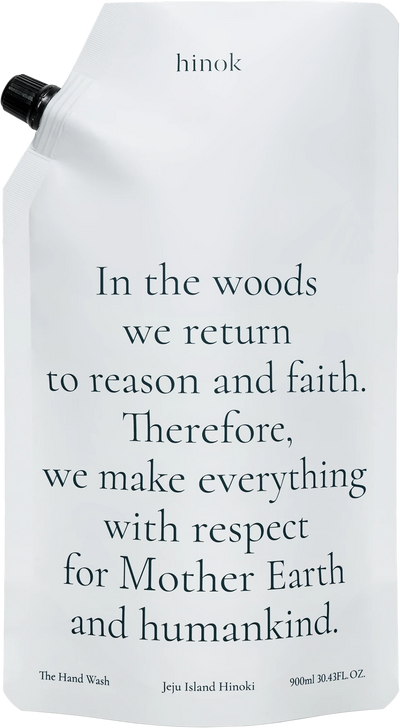
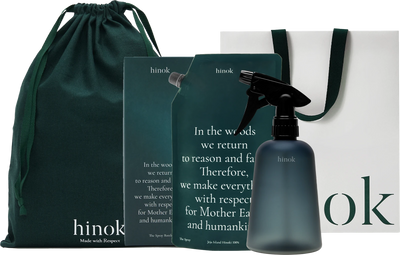
hinok is PETA Certified Vegan and cruelty-free. We are Plastic Neutral certified by rePurpose Global — every gram of plastic we put into circulation is offset by recovery of the same weight from waterways and shorelines. Our refill pouches use far less plastic than a new bottle, and the bottle you already own stays in use.
None of these are claims we wanted to make. They are consequences of how we decided to begin.

We don't make products. We receive them.