
Steam rises as hinoki water condenses — pale, dilute, quietly aromatic. You watch it gather in glass, and it looks like what it is: care stripped of anything unnecessary.
"Clean" has become a crowded word in personal care. It is worth being specific about what we mean when we use it.

What Clean Means, Here
At hinok, Clean Made is not a marketing category. It is a short, verifiable list.
Every bottle carries the full INCI in plain English and Latin binomial — no "fragrance" as a placeholder, no proprietary blend standing in for a paragraph of ingredients. If you cannot pronounce something on our label, the fault is with scientific naming, not with what we decided to hide.
Before a hinok formula reaches you, it passes ten separate toxicology screens. A human patch test on thirty-two volunteers recorded an irritation index of 0.00. We omit parabens, phthalates, synthetic dyes, and twenty other additives routinely flagged in independent review. PETA Certified Vegan, cruelty-free. Nothing in the bottle has asked an animal to try it first.
What We Don't Claim
We do not call our products detoxifying. We do not say they purify. These are words that have been stretched past the point of meaning anything.
What we claim is what can be measured. An irritation index. A list of excluded ingredients. A distillation process that does not involve solvents. A skin-compatible contact profile for daily use. Those claims have paper behind them.
A Plain-Language Label
The hinok label is arranged so that a customer, a regulator, and a reformulator can all read it the same way.
- Full INCI. Jeju Hinoki Cypress (Chamaecyparis obtusa) Water is named by genus and species. Every other ingredient is listed in descending order of concentration.
- Batch code. Traceable to distillation date and lab certificates. If you want to see paperwork for the bottle on your shelf, we can send it.
- Certifications. PETA Certified Vegan, cruelty-free, Plastic Neutral by rePurpose Global — listed directly, not behind a seal you have to guess at.
- Care guidance. How to lock, how to store, how to refill. Nothing buried in fine print.

Clean Also Means: Keep It in Use
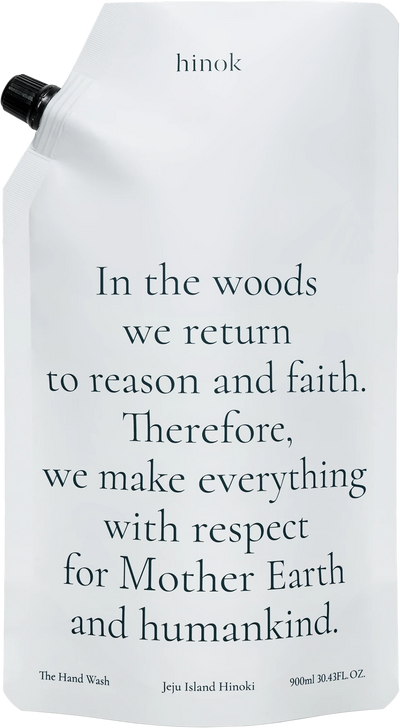
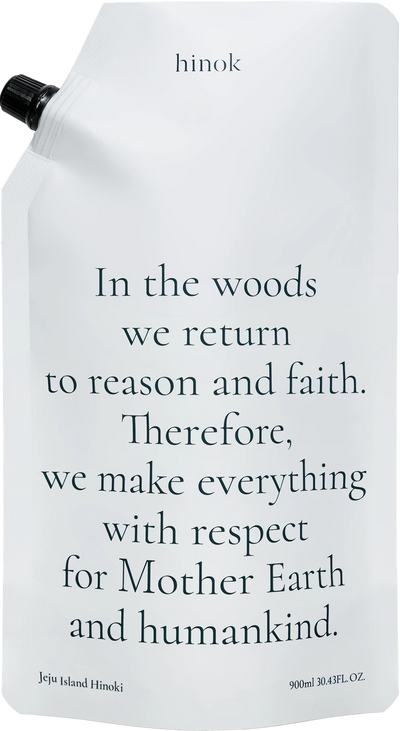
A clean formula in a bottle that gets thrown away three months later is not clean. The most honest form of restraint is refill.
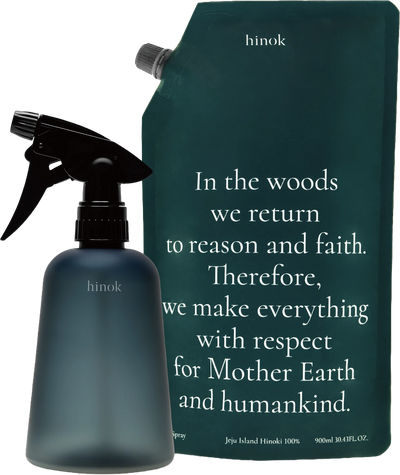
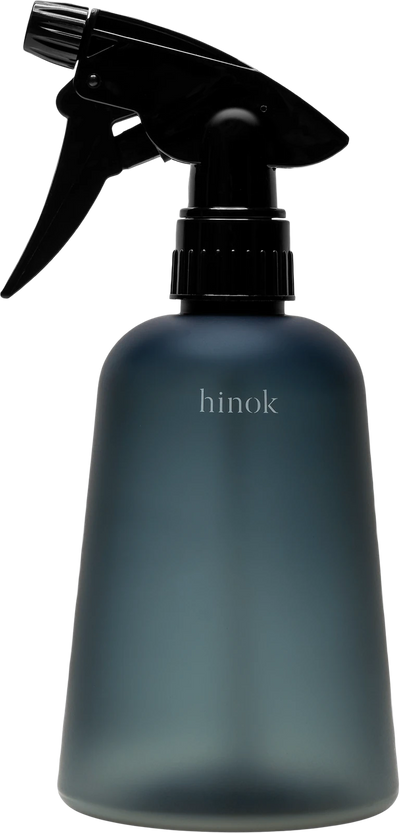
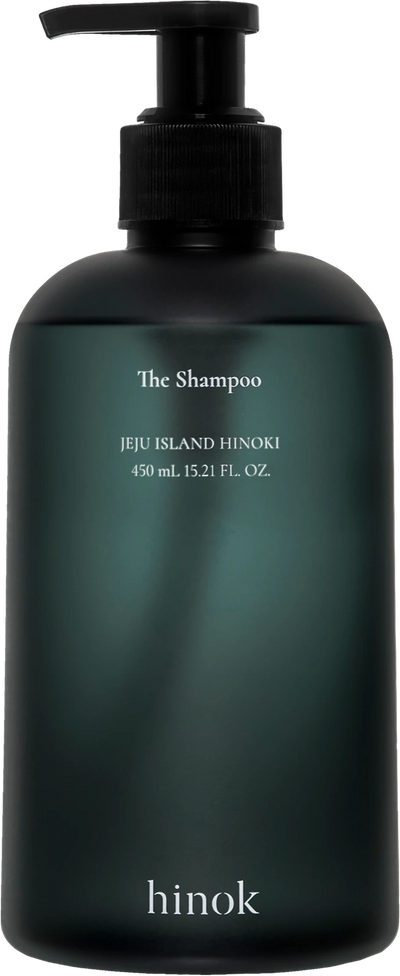
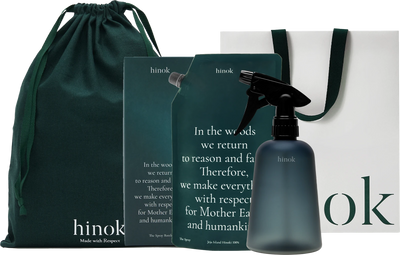
Our core bottles are designed to stay in service. Each refill cycle keeps the same bottle in service, with far less plastic than a new bottle. We are Plastic Neutral certified by rePurpose Global — every gram of plastic we put into the world is offset by recovery of the same weight from waterways and shorelines. The Long Life Service covers the trigger mechanism for five years.
None of these numbers are incidental. They are what allow "clean" to mean something beyond a label.
Rooted in What Was Already There
Our core ingredient — upcycled Jeju hinoki foliage — begins life as pruning waste. Broken branches, fallen leaves, trimmings from routine care of old-growth groves. Material that was going to be discarded or burned.
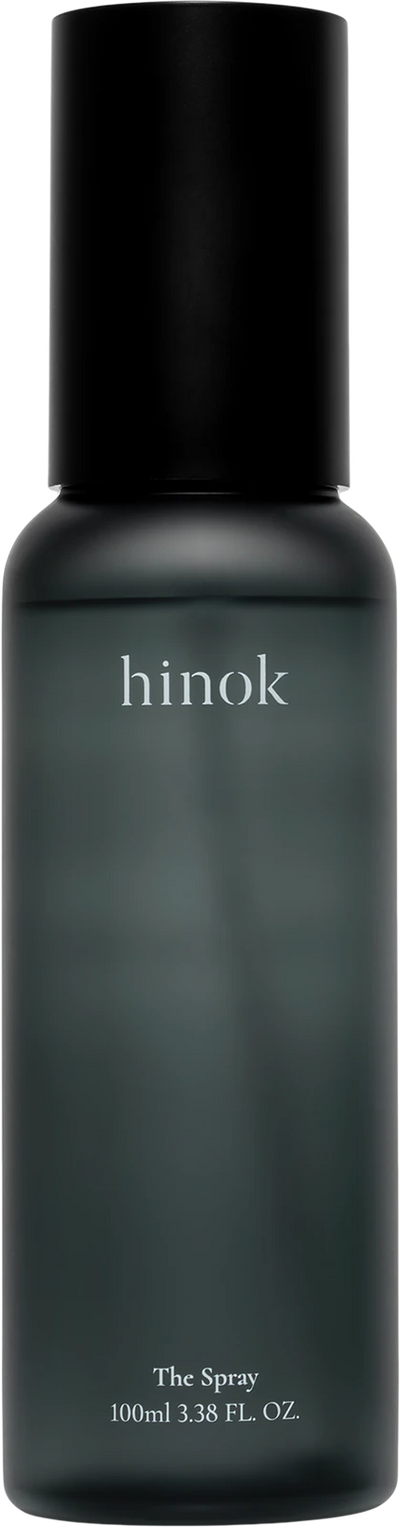
Steam distillation turns it into the water phase that goes into The Spray. No tree is cut, no grove is reduced. What enters your bottle was, a few months earlier, forest the trees did not need to keep.
An Agreement, Not a Trend
Clean is not a category we are trying to join. It is an agreement with the person on the other end of the bottle — to write down what is actually in the formula, to keep the bottle in service long enough to matter, and to do the quieter work of sourcing without depleting anything.
Fallen, not Harvested. Nothing is wasted.