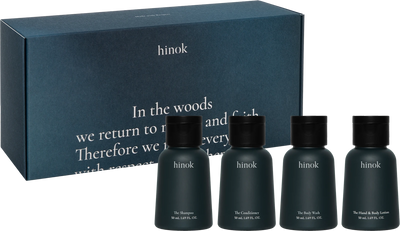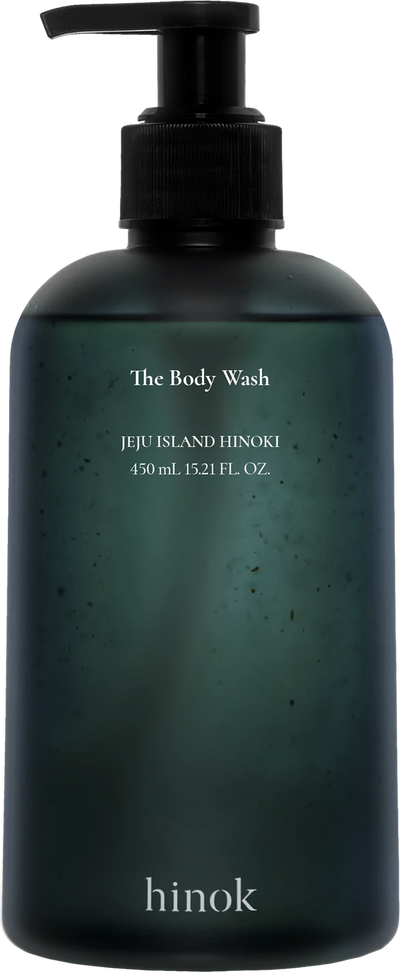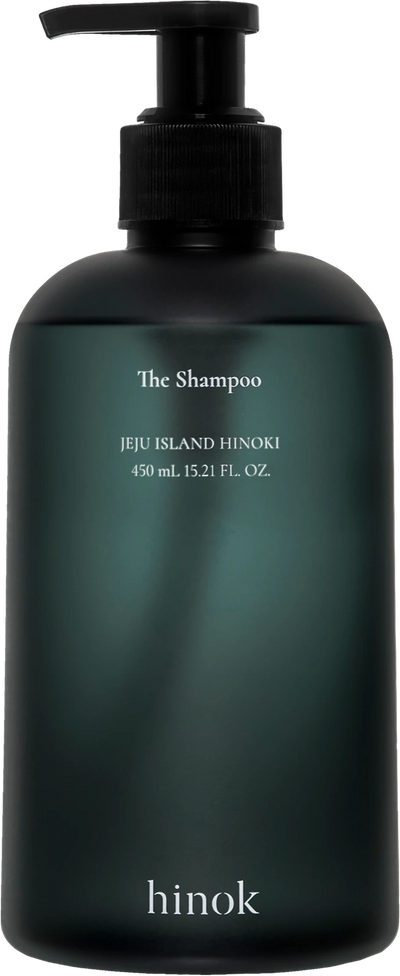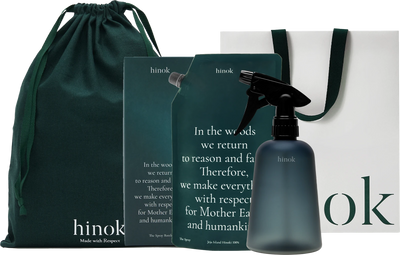

Two words look related, but they name different things. Hinoki cypress is a tree. hinok is a brand made from what that tree gives up each year during regular pruning.

The tree on Jeju
Hinoki cypress is Chamaecyparis obtusa, an evergreen native to East Asia. On Jeju Island, off the southern coast of South Korea, it grows in volcanic soil and ocean-salted wind. The trees that survive these conditions grow slowly. Their wood is dense and resinous.
The forests on Jeju are managed. Each year, branches and leaves are pruned to keep the trees thriving and to reduce wildfire risk. This is regular forestry, not harvesting. The trees stay in the ground. What comes off the trees is mostly what would have fallen anyway.

When you walk through a hinoki cypress forest, the air carries something. That something has a name: phytoncides — the aromatic compounds released by cypress trees. Phytoncides are part of why a forest can feel like it's clearing your head. The compounds (α-pinene, sabinene, limonene) drift from the leaves and bark into the air. People on Jeju have practiced 산림욕 (sallimyok), or forest bathing, for generations.
The brand: hinok (희녹)
The brand name is Korean. 희녹 (hinok) means "ever-green." It is pronounced hee-nok, with the stress on the first syllable.
The lowercase spelling is by design. hinok is not a declaration. The brand name is a single Korean word, written small, for a small Jeju-origin company that makes personal care and home care from a single material principle: use what the forest lets go.
The brand's defining sentence is "We don't make products. We receive them." The word receive is meant literally. The forest does the growing. We gather what falls and distill it.

How the tree becomes the brand
Each year, when Jeju's hinoki cypress forests are pruned, the cuttings are collected rather than discarded. The leaves and trimmed branches go to a Jeju distillation facility, where they are steam-distilled into two outputs: hinoki cypress water and hinoki cypress oil.
Steam distillation is a physical process with no solvents. The cuttings are placed in a vessel, steam passes through them, and the volatile compounds, including the phytoncides, are carried into a condenser. What comes out is a clear liquid (cypress water) and a small amount of essential oil that floats on top. Both are used.

These two outputs go into every hinok product:
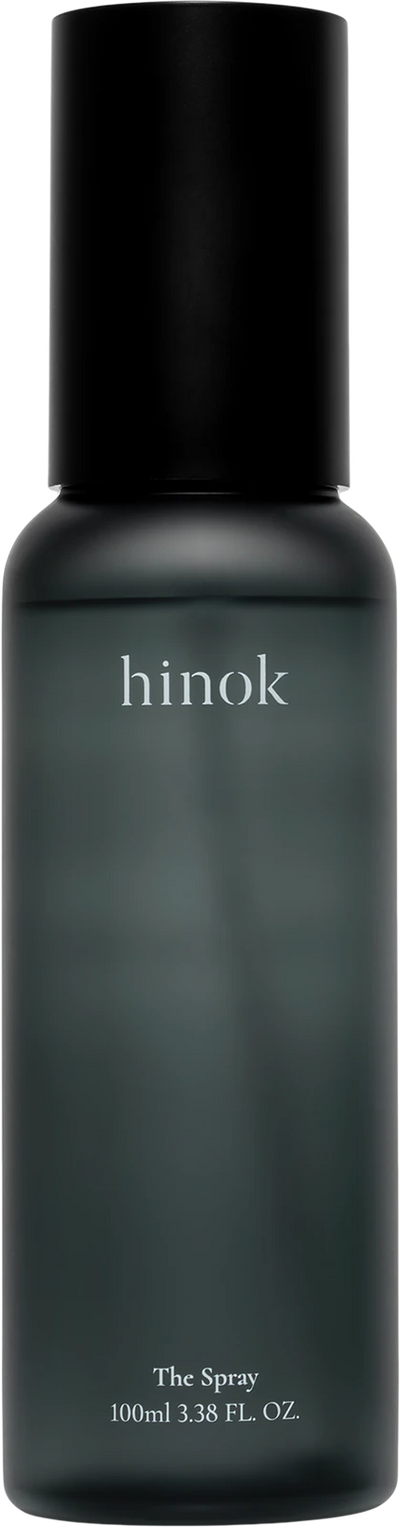
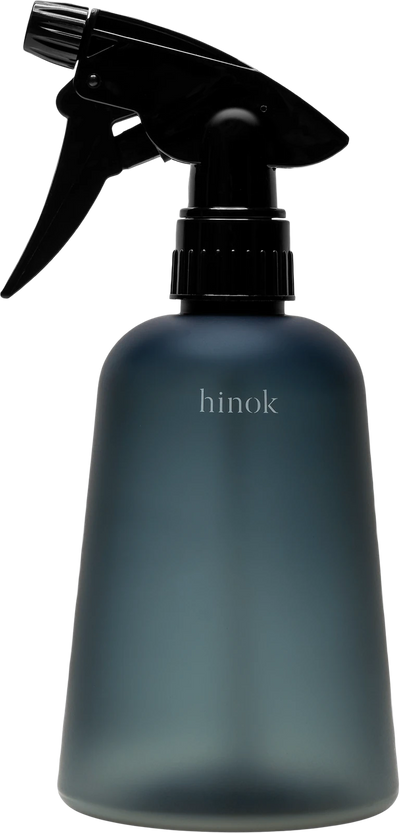
- The Spray uses cypress water and oil to remove odor from fabrics and spaces. It is a deodorizer, not a fragrance. The scent fades within minutes.
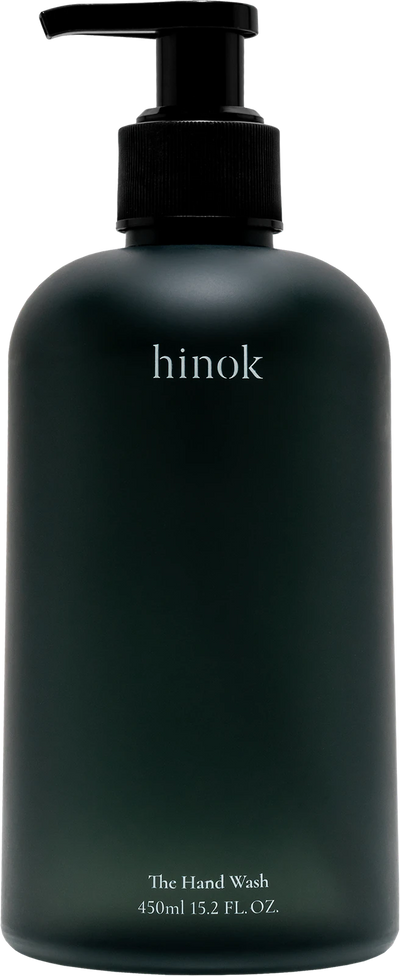
- The Hand Wash uses cypress water as a base. So do The Body Wash, The Shampoo, The Conditioner, and The Hand and Body Lotion.
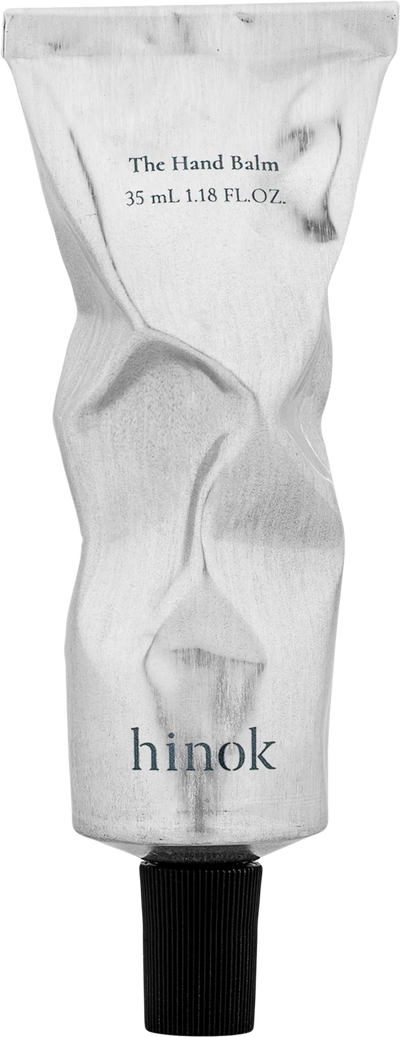
- The Hand Balm carries cypress oil in a small tube made for pockets.
Across the line, the same principle holds. The active material is upcycled from pruning byproducts on Jeju.
No trees are harmed. Nothing is wasted.